Unvarnished Truth – Summer 2019

Curated News for String Musicians

Keep up to date on our best sales, occasional free offers, and upcoming concerts. See relevant posts from our staff on: repair, instrument care, trade secrets, instrument photos, music news, and customer pics, sent quarterly.

Have content of your own? Email it to us and we may include it in our next newsletter.

In this newsletter:
  •   Shop Retreat in the Woods
  •   Classical Italian Varnish Workshop
  •   Frog-Making Workshop
  •   Swimming Cellos
  •   Common Buzz Culprit –Your Fingerboard!
  •   A Good Thing Comes Out of a Bow Disaster
  •   Private Sale Invitation

Do you know other musicians who are passionate about stringed instruments? Forward them our newsletter!
You can subscribe here:
https://mailchi.mp/b5a91e7bb31e/unvarnished–signup

Mount Airy Violins & Bows Retreat

A VISION QUEST

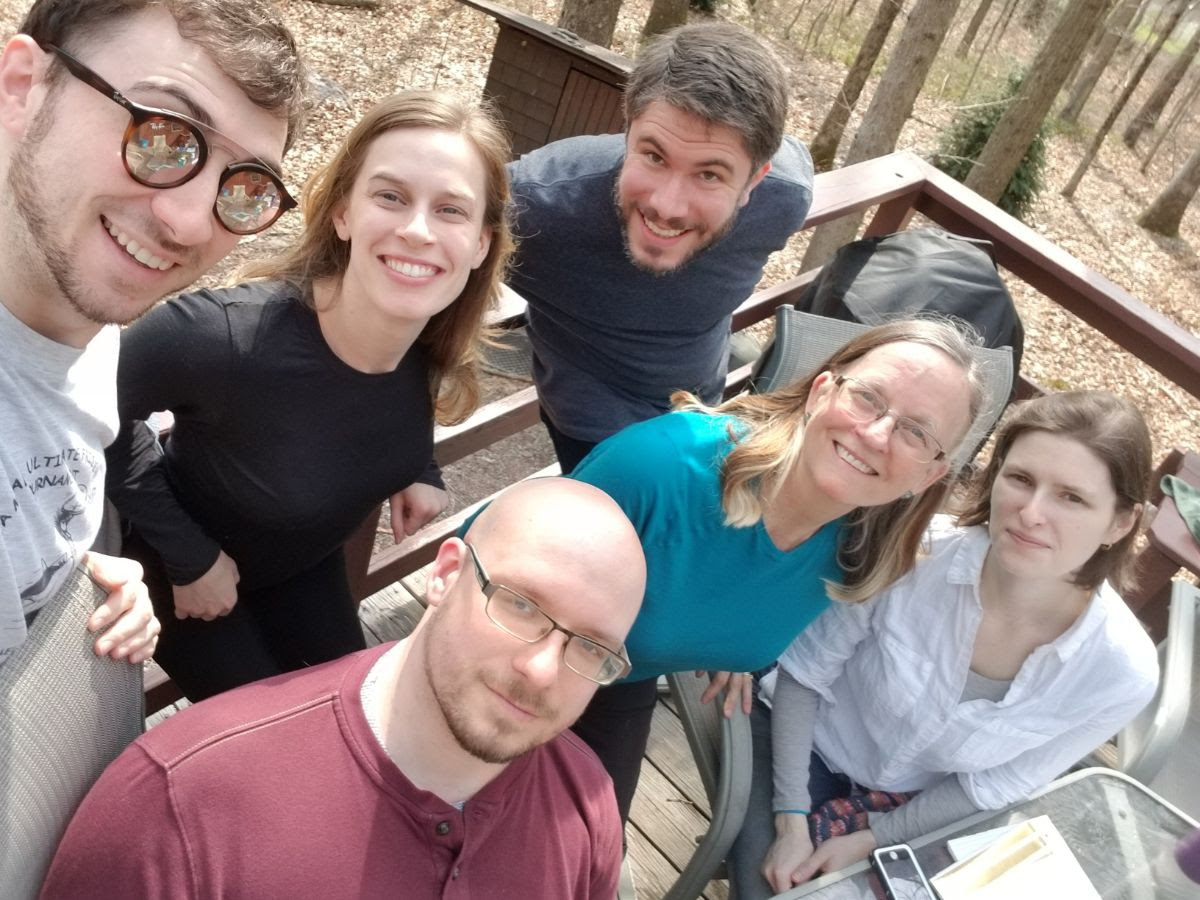
This April, we all went up to Jim Thorpe for a day and a half to codify Guiding Principles, review our Mission Statement and imagine a future vision for the shop. Our working sessions were punctuated with beautiful hikes and fabulous vegan food. Our time was well spent, and we came back excited about the future as we get closer to realizing the possibilities for a worker-owned and -managed shop. (More on this in the year to come.)

Here are Our Guiding Principles:

  • Great products
  • Great service
  • Great shop experience
  • A great and fun place to work
  • Sustaining profits
  • Strong relationships
  • A place to learn
  • An active part of our community
  • Raising the bar for the industry
 
Ongoing Staff Talent Development

ITALIAN CLASSICAL VARNISH WORKSHOP

This March, Liz and Thomas spent a week at the brand new Learning Trade Secrets Workshop in Ashland, OH for a course about Classical Italian Varnish. The course was run by Philadelphia-based violin maker, Christopher Germain, who invited our luthiers to attend.

It was a 5-day intensive workshop where participants varnished instruments using a traditional oil varnish nearly as it was done long ago in Italy. Traditional oil varnish is cured by sun exposure with natural UV light. Unfortunately, 5 days is too short to depend on the sun. Instead, we used a varnishing catalyst and special UV light boxes to replicate the sun’s rays 24/7 to help things dry faster.

Both Liz and Thomas learned a lot and the instruments they worked on will be available to try later this year. Below are some pictures from the workshop. Also, if anyone is interested in woodworking/trade/craft, the Learning Trade Secrets Workshop will be offering classes in the coming years, ranging from instrument and bow work, to making a ukulele, or even paper-making!

The Varnish Group

FROG-MAKING WORKSHOP 

In May, Adam attended the frog- and button-making workshop at Learning Trade Secrets in Ashland, OH. With instructor David Forbes, Adam made two violin frogs over the course of the 5-day class. He’s included a few pictures of the process below.

Swimming Cellos

Check out this fun project! A friend and classmate of Thomas is doing some interesting art with cellos that are beyond repair.
https://www.classicfm.com/discover-music/cellos-in-swimming-pool/


We sometimes have instruments that would make great art projects, too. Let us know if you want to be added to a growing list of people who we notify about instruments that we donate as art projects!

 
Fingerboard Check-Up    
Groovy Fingerboard

Are your strings are difficult to press down?  It could be due to your fingerboard being too scooped or your bridge or nut being too high. If it’s relatively comfortable to play in first position, but very difficult to play at you get higher up the fingerboard it’s probably the bridge. If it’s difficult to press the strings down in first to third position, but it feels relatively easy to play in higher positions, it’s more likely that it’s the fingerboard or nut.

When there isn’t enough scoop it causes other problems. You can hear buzzing when the string hits the board, especially when playing in lower positions. (Here’s a fun video of a string being played in slow motion; you can see how much the string moves!) https://www.youtube.com/watch?v=6JeyiM0YNo4&feature=youtu.be
Other common issues that cause buzzes are bumps and divots in the fingerboard. After years of playing, the strings can wear deep grooves into the fingerboard, like this instrument in the first picture.

Here is the board now properly planed.  
You may have noticed that this is not high grade ebony. We believe that players with lesser instruments deserve to have them set up exceptionally well, too.
 
How a Good Thing Came Out of a Bow Disaster     

Commission for a Broken Stick by Elizabeth Shaak
Have you ever known someone who had the awful experience of having their prized bow break? That happened to one of our customers and he decided to turn a bad situation into a positive one by asking me to make him a replacement stick.

His beloved French cello bow by Charles Bazin  was splintered in shipping. His insurance (dear reader, you DO have insurance for your valuable bows, right?) covered more than enough for the new stick. We decided together on making something in the same style, replicating the strength, weight, balance, basic graduations (thicknesses) and camber (curvature) concepts. Balancing this information with the current piece of wood, it is possible to get quite close to the feel and strength of the original bow.  

It really was a win/win situation. I was even able to address some issues that the Bazin had, which made client happier, and he was able to directly support the work of a living artist.

Planing the stick. (My little bow plane is from the Morizot family in Mirecourt, France.)
Carving the shape of the head, adding the tip plate.
 
The finished bow.
 
Will It Change The Sound??    

Welcome to our new regular feature!

Can a new tailpiece change my sound?

Yes, changing your tailpiece can alter your sound! This can happen in two ways: first, tailpieces do come in different lengths; we will use longer or shorter tailpieces in order to get the correct afterlength (the distance between the top of the bridge and where the strings hook into the tailpiece). Having the correct afterlength for the instrument will have a profound effect on the sound.

The second way in which tailpieces can modify your instrument’s sound is through weight and density. There are many different substances from which tailpieces are made — various types of hard woods; plastic; even metal! All of these vibrate in different ways.

Heavier tailpieces tend to act as a mute on the instrument, whereas lighter tailpieces will allow for a brighter sound. One way of calming down an unpleasantly-bright or piercing-sounding instrument is to try a heavier tailpiece. Sometimes people will even add a bit of adhesive tungsten putty or similar substance to a tailpiece in an effort to mellow an instrument that is too shrill (or, perhaps, to eliminate a ‘wolf’ note).

Alternately, lighter tailpieces, or tailpieces that are very inflexible, can accentuate brighter sounds and perhaps bring out a bit more edge or ‘penetrating power’ in an instrument. If you’re looking for more ‘punch’ to your sound, or you want your instrument to be a bit brighter, you may want to consider switching to a lighter tailpiece. You can get some of this effect by using a lighter wood (say, boxwood) for your tailpiece, but there are also tailpieces of artificial substances designed specifically for this purpose.

Don’t let this Happen to You! 
Be sure to use your violin shop for regular maintenance. 
Our September issue will focus on bridges!
 

Leave a Reply

About Us

We make, sell and repair a wide range of stringed instruments, their bows and accessories while providing friendly, honest expertise in a welcoming atmosphere.

Recent Posts

Follow Us

Get To Know Us

Shopping Cart
0

Contact Us